
Understanding Seborrhoeic Keratosis: Those “Stuck-On” Spots Explained
If you’ve noticed a new, crusty, or waxy growth on your skin that looks like a bit of brown candle wax or a “barnacle,” you’re likely looking at a seborrhoeic keratosis (SK). While they might look a bit startling, the first thing to know is that they are entirely harmless.
Here is a breakdown of what these common growths are and a look at one of the most advanced ways to remove them: the blue dermal laser.
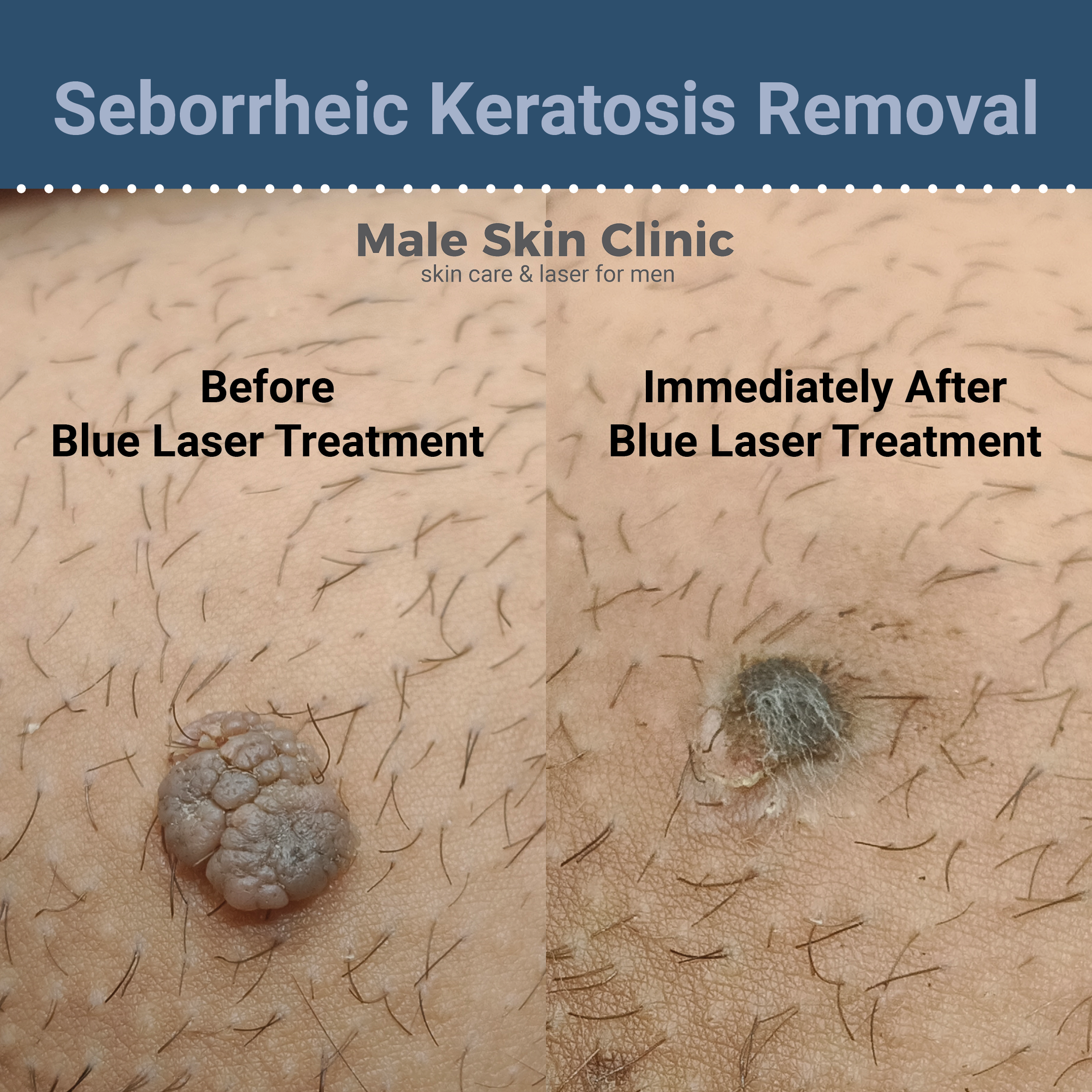
What Exactly Are They?
Seborrhoeic keratoses are non-cancerous (benign) skin growths caused by a buildup of ordinary skin cells. Often nicknamed “the barnacles of aging,” they are incredibly common—most people start seeing them after age 40, and by age 70, about 75% of people have at least one.
How to Spot One
SKs have a very specific “look” that helps doctors identify them:
- The “Stuck-On” Appearance: They don’t look like they grew from the skin, but rather like they were pressed onto it.
- Texture: They can be waxy and smooth or rough and “warty.”
- Colour: They range from pale tan to deep black.
- Location: Mostly found on the chest, back, head, and neck. They never appear on the palms or soles of the feet.
Modern Removal: The Blue Dermal Laser
While SKs don’t need to be removed for health reasons, many people choose to do so if they become itchy, catch on clothing, or are a cosmetic concern. Traditional methods like freezing (cryotherapy) or scraping (curettage) are effective, but many modern clinics now recommend the blue dermal laser (such as the K-Laser Blue Derma) for its superior precision.
Why Choose Blue Laser?
- Extreme Precision: The 445nm blue wavelength is highly absorbed by melanin (pigment) but not by water. This allows it to target the growth specifically without damaging the surrounding healthy skin.
- Bloodless Procedure: The laser instantly cauterises the area as it works, meaning there is typically no bleeding and no need for stitches.
- Faster Healing: Many blue dermal lasers combine surgical wavelengths with therapeutic ones (like 660nm and 970nm) to stimulate tissue repair, leading to quicker recovery and minimal risk of scarring.
- Comfort: Most patients describe the sensation as a slight sting or warm tingle, making it a well-tolerated, “in-and-out” procedure.
Should You Be Worried?
Because SKs can sometimes be dark or irregularly shaped, they can occasionally be mistaken for melanoma.
The Rule of Thumb: If a spot changes shape quickly, bleeds on its own, or turns pitch black, get it checked by a GP or dermatologist. They can usually identify an SK just by looking at it, but they might take a tiny sample (biopsy) if there’s any doubt.
Are you considering removal for a spot that’s currently bothering you? It’s always best to start with a professional consultation to ensure it is a benign keratosis before proceeding with laser treatment.
Recent Comments